
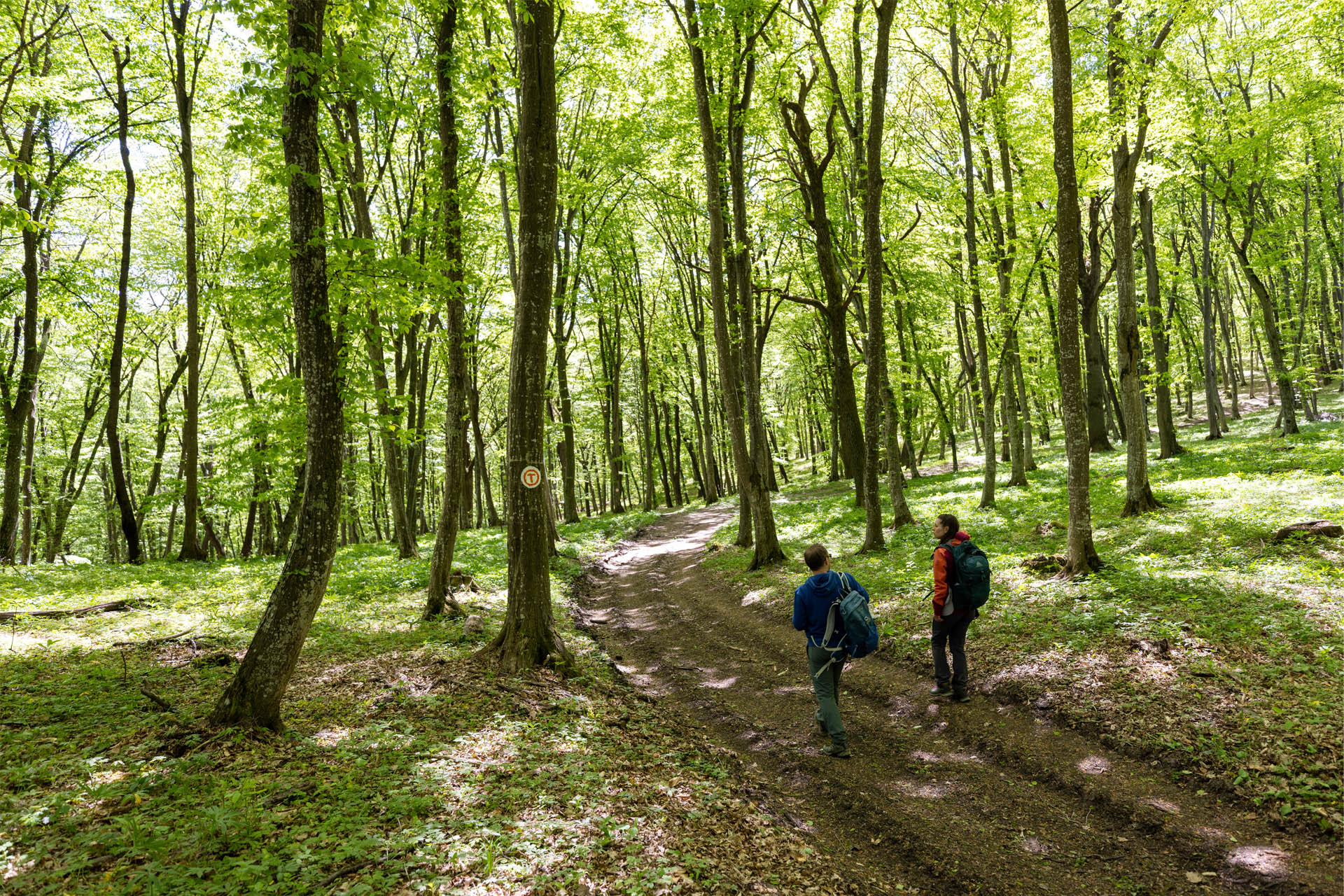
Although the main responsibilities regarding dog management belong to owners and authorities, the hiker’s behavior is often the triggering factor or, conversely, the prevention one. Safety on the trail is the result of a collective effort, but the hiker must be aware that it begins individually.
An informed, properly equipped, and balanced hiker significantly reduces the risk of an incident. Their level of information, equipment, and self-control can turn a tense situation into an episode without consequences.
Safety on the Via Transilvanica trails is the result of a balance between the responsibility of the dog owner, institutional intervention, and the mature and correct conduct of the hiker.
If the hiker is alone, psychological pressure is greater, and the risk of being surrounded is also greater. For this reason, the following refers to this situation, although the recommended conduct is perfectly valid for groups as well. A group of hikers, even a small one, has several advantages that must be used, such as greater visual mass, the possibility of organizing in a compact defensive formation, and especially the ability to support one another.
1. Inform yourself
Before departure:
inform yourself about the local specifics: presence of sheepfolds, type of terrain;
study the integrated prevention and responsibility guide and the practical guide for hikers;
understand the dog and its role;
know the difference between warning barking, intimidating approach, and real attack behavior;
minimal education in canine ethology is a safety tool.
2. Equip yourself
Proper equipment provides additional control, helps you keep calm, and helps you adopt correct conduct, knowing that you have at hand, strictly as a last resort, one final effective defense solution: spray.
Recommended equipment:
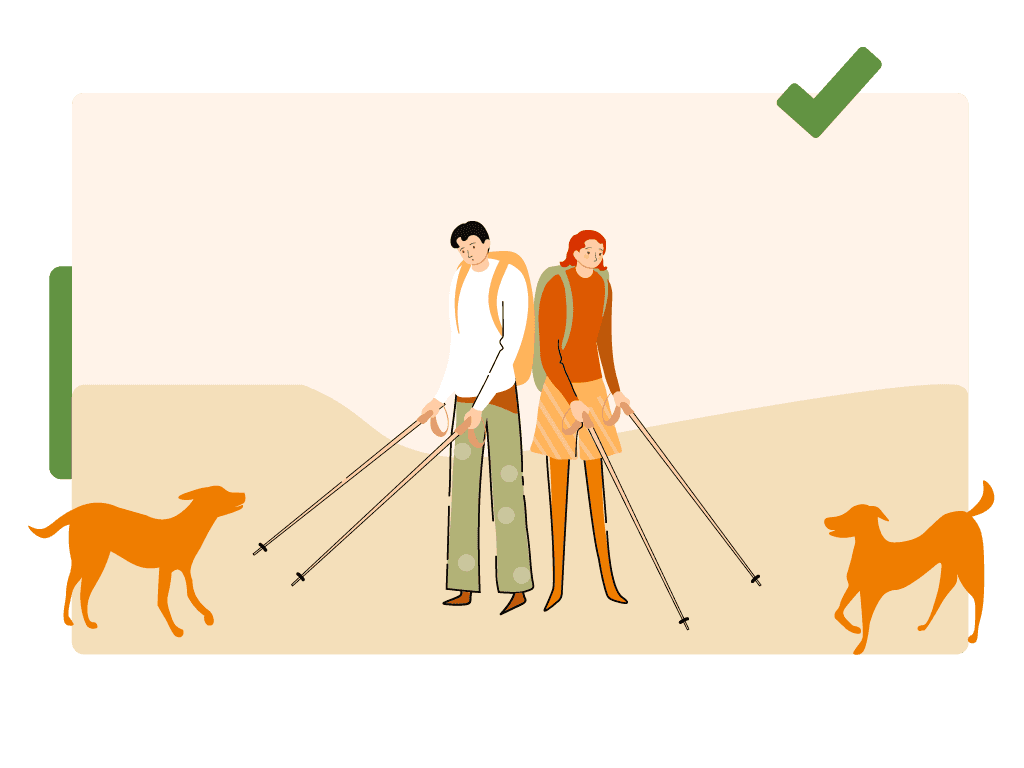
trekking poles, used defensively, not aggressively;
sound alarm or whistle, which helps you make your presence known early;
approved repellent spray, used strictly as a last resort;
charged phone;
visible clothing;
backpack worn correctly, which can become a physical barrier;
basic first aid kit.
For cyclists, they should take into consideration:
the ability to get off the bicycle quickly;
the bicycle can function as a physical shield.
3. Prepare mentally
1.
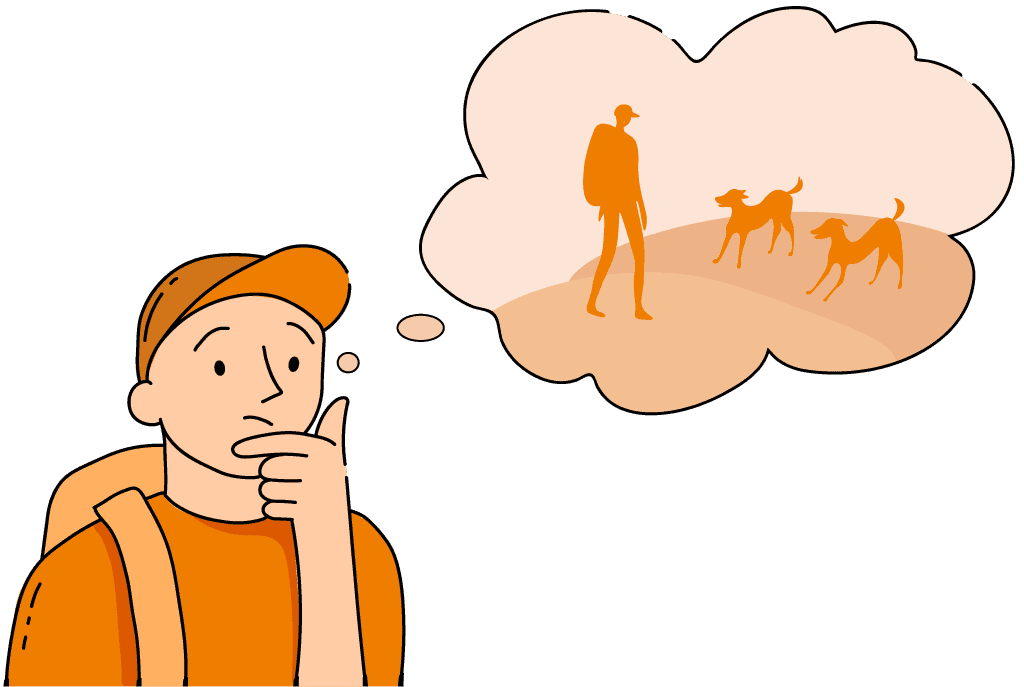
emotional reaction determines the dog’s reaction;
2.
control the impulse to run;
3.
accept the possibility of a tense encounter;
4.
mentally rehearse the following scenario: I stop, seek higher ground, position myself firmly, speak calmly, retreat slowly;
5.
intense fear, panic, and sudden movements increase the likelihood of escalation.
4. Act preventively and responsibly
When observing a sheepfold or flock:
1.
slow down;
2.
make your presence known using a sound alarm or whistle;
3.
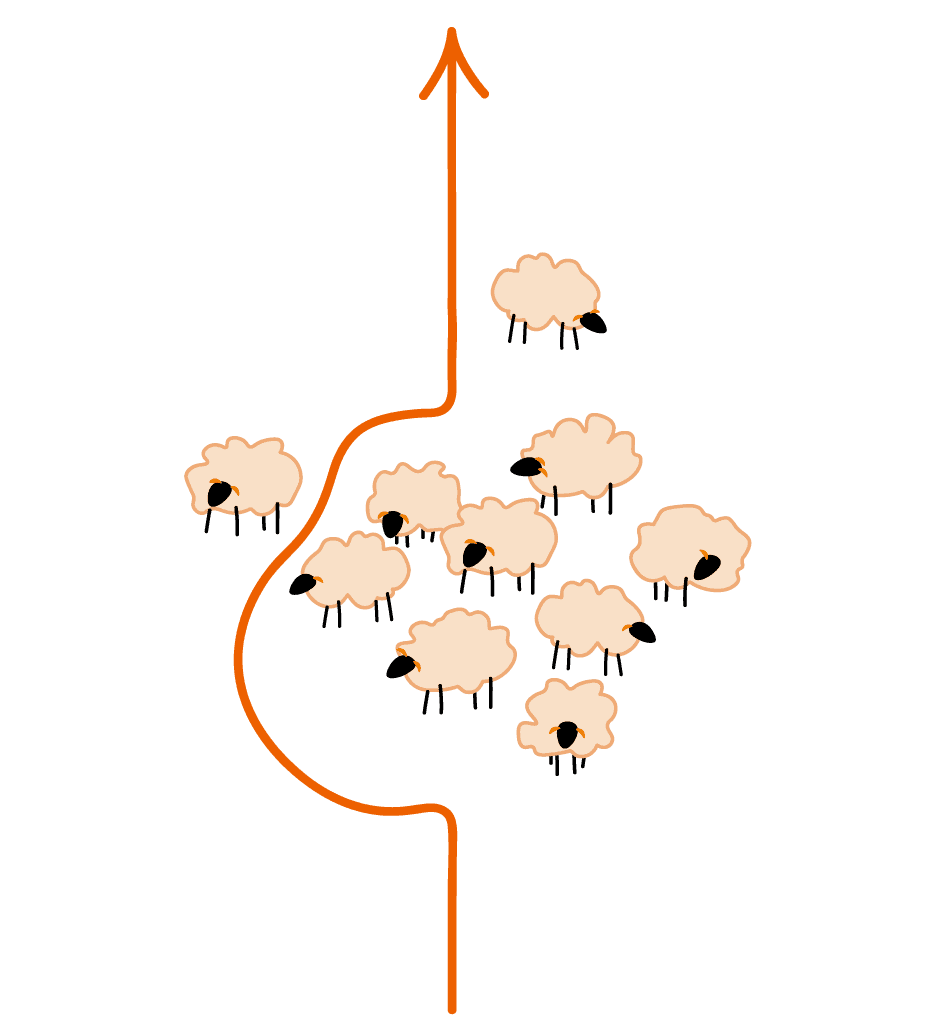
keep a distance of 50–100 m from the flock; any approach below this threshold increases the risk exponentially;
4.
avoid crossing directly through the flock;
5.
a wide detour is the correct decision, even if you temporarily leave the trail;
6.
maintain distance and calm;
7.
seek visual and auditory contact with the shepherd;
8.
do not provoke;
9.
do not run;
10.
do not film or photograph insistently from close range.

In a group:
1.
remain in a compact group;
2.
do not leave anyone behind;
3.
do not allow chaotic reactions;
4.
adopt a defensive group posture by keeping the group compact, with trekking poles raised sideways but not threateningly, forming a large visual barrier. The group becomes a large “hedgehog,” moving forward slowly and transmitting a signal of firmness without aggression.
The hiker has the duty to adapt behavior to the pastoral context. Distance and calm solve more situations than any device.
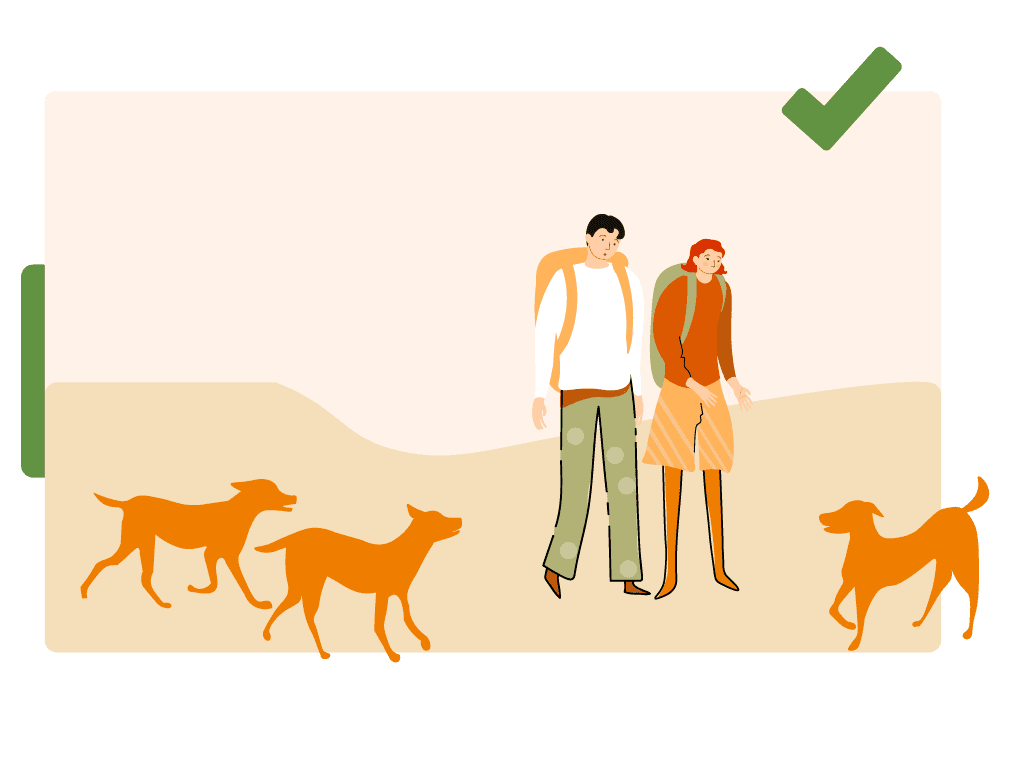
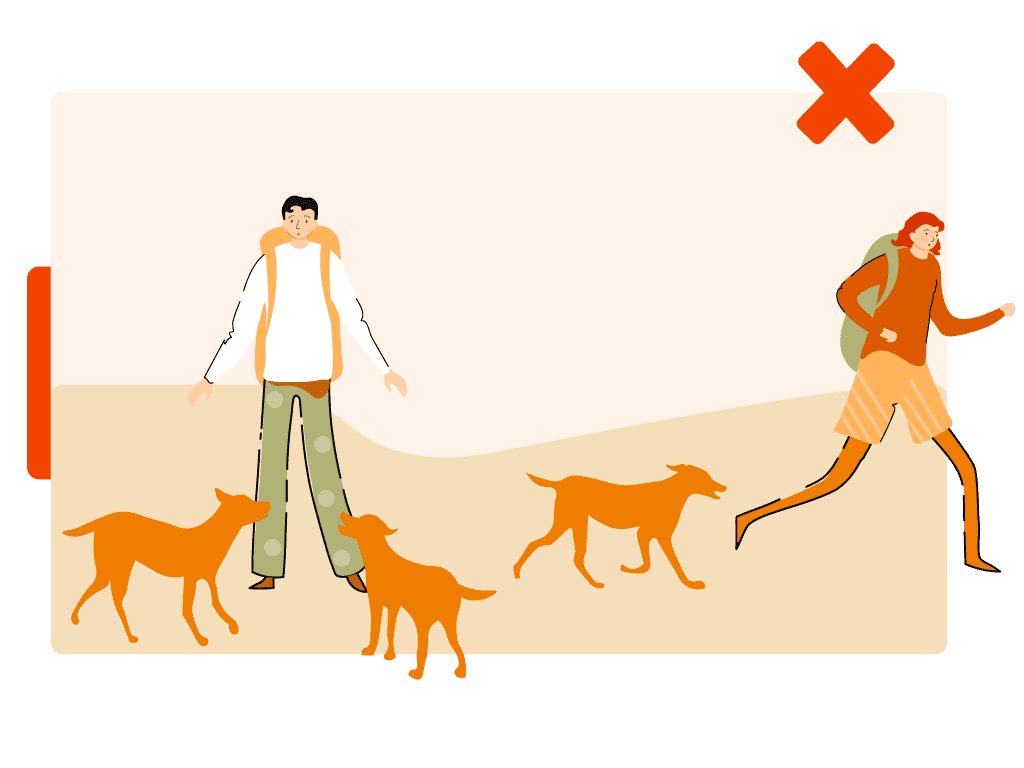
5. Act correctly when dogs approach
Obviously, the dogs will approach to assess the “danger.” What you must do:
1.
stop temporarily and assess calmly; body language is important;
2.
try to communicate with the shepherd;
3.
avoid fixed eye contact; prolonged eye contact is perceived as a challenge;
4.
position yourself sideways toward the dogs, upright, stable, and as relaxed as possible;
5.
adopt a firm but non-aggressive attitude;
6.
move slowly and steadily, with a clear and predictable trajectory for the dogs;
7.
keep an object, stick, backpack, or bicycle, as a boundary element, not as an aggression tool;
8.
speak calmly, not excessively, and do not make sudden movements;
9.
use short commands such as “Stay”;
10.
do not run, because you trigger the chase instinct;
11.
do not turn your back on them.
If one or more dogs approach aggressively:
1.
stop moving;
2.
call briefly to the shepherd;
3.
adopt a stable, sideways, upright position;
4.
breathe slowly and deeply, with a calm, low voice;
5.
keep verbal communication minimal, low tone, rare, neutral, with short and clear words: “Stay”;
6.
keep an object between you and the dog: poles, backpack, bicycle;
7.
avoid fixed and prolonged eye contact, look peripherally;
8.
do not turn your back;
9.
distract their attention in any way;
10.
retreat slowly, without running;
11.
file an online police report, according to the model in the integrated guide.
Use spray only if:
1.
the dog enters the critical space, 1–2 m;
2.
there is a clear imminent bite risk.
If the animal claims the space, take one firm step forward, not backward. Make a short, deep, determined sound: “Hey!”. Raise your arm slowly.
If it has reached this point, call 112.
Most situations are defused through calm firmness.
6. Act correctly in case of an attack, without bite
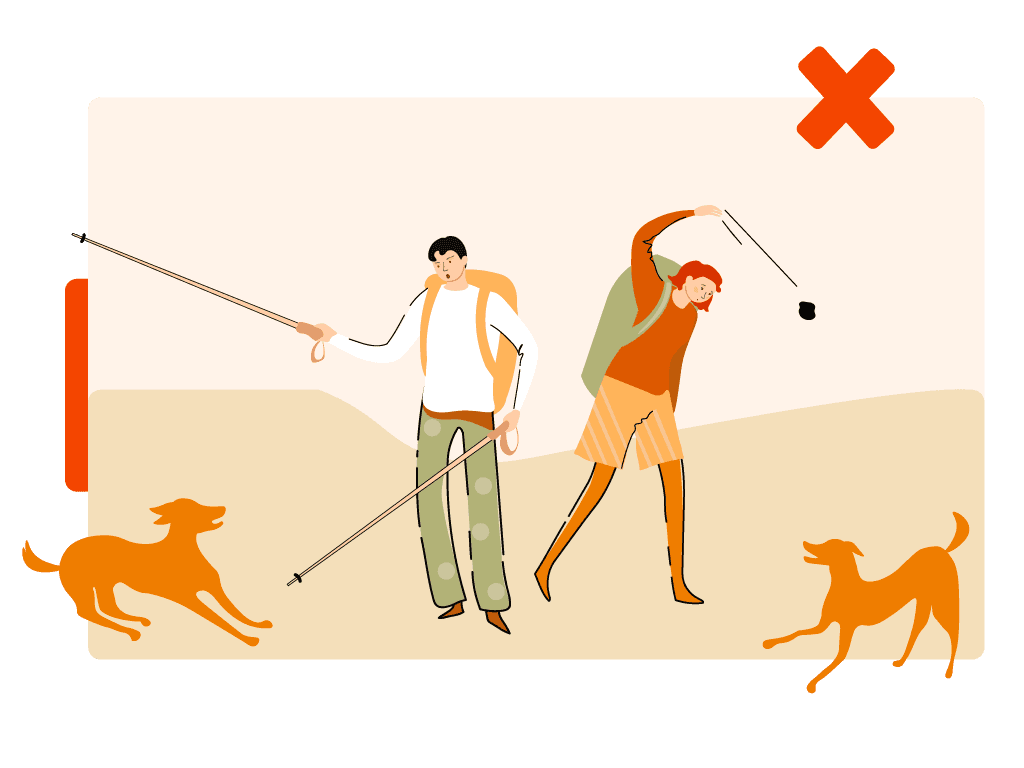
7. Act correctly in case of physical contact
1.
if the use of spray has not removed the dogs for various reasons, many dogs, wind, rain, do not abandon it; it may still be useful;
2.
do not retreat in panic. Sudden retreat stimulates repeated attack;
3.
protect vital areas;
4.
keep your backpack in front;
5.
keep your forearms in a protective position, close to your body;
6.
protect your neck and face;
7.
push the dog decisively sideways;
8.
unbalance it, do not strike chaotically;
9.
try to maintain firmness until the dog gives way to pressure;
10.
the goal is to interrupt the dog’s aggressive behavior.
After the dog withdraws:
1.
do not continue the confrontation;
2.
do not chase the animal;
2.
leave slowly, without suddenly turning your back.
8. Act correctly in the case of an attack with a bite
The absolute priority is personal safety.
Immediately after the incident:
move away from the risk area;
if you could not call 112, do it now;
apply pressure to the wound to stop bleeding;
wash and disinfect the wound;
request emergency medical evaluation, including rabies prophylaxis if necessary.
Do not ignore the bite, regardless of severity.
This chapter closes the circle of responsibilities through individual accountability.
@2026. Via Transilvanica. All rights reserved.