


ANIMAL PROTECTION POLICE
In the context of preventing and managing situations in which dogs, including shepherd dogs, may pose a danger to persons or property, the Animal Protection Police, within the Romanian Police, has an operational, preventive, and sanctioning role, supported by current Romanian legislation.
Responsibilities:
preventing dangerous situations through inspections and information;
intervening in reports concerning aggressive or dangerous dogs;
applying administrative sanctions for failure to comply with legislation;
ordering administrative measures, including relocation;
cooperating with other structures: public order, local administration, veterinary authority;
contributing to the accountability of owners through education and information.
Verification duties and competence
The Animal Protection Police may carry out checks at sheepfolds, households, or other locations to verify compliance with dog-related legislation:
microchipping;
registration;
vaccination;
ensuring welfare;
keeping conditions;
specific obligations regarding dangerous dogs;
control of the area and potentially dangerous situations;
dogs kept unsupervised or in conditions that may pose a risk to other persons.
In addition to the Animal Protection Police, the following also have inspection and control duties at sheepfolds:
the Police, where there are no Animal Protection Police structures;
the Local Police.
authorized veterinarians are responsible for implanting the microchip and registering the dog in the Register of Owned Dogs, RECS, but they do not have an initial control duty on site without a request or without the support of the competent authority.
Response to emergency situations
When there is a report through 112, the Animal Protection Police may intervene as part of the public order team for:
rapid assessment of the situation;
applying legal means to control and remove dangerous animals from the area;
securing the area until it is taken over by other structures: medical, local, etc.
Applying sanctions and administrative measures
Administrative sanctions
The Animal Protection Police may apply fines for:
failure to fulfill legal obligations regarding animal ownership;
lack of minimum animal welfare conditions;
failure to supervise dogs that may create danger in public space.
Issuing administrative orders
Police officers may issue orders for placement in a shelter for animals in a serious state of neglect or danger, which may also include dogs left unsupervised or aggressive.
Cooperation with other authorities and community sectors
The Animal Protection Police works in coordination with:
local police and gendarmerie, for public order situations;
veterinary authorities, for health and welfare matters;
shelter services, for placing animals in authorized shelters;
town halls and other local institutions, as part of information, sterilization, and stray dog management campaigns.
Prevention: educational and informational role
Prevention must come before sanctioning. Animal protection police officers carry out educational activities:
public information on the obligations of animal owners;
awareness campaigns regarding animal welfare;
consultation on preventing conflicts between people and animals.
MOUNTAIN GENDARMERIE
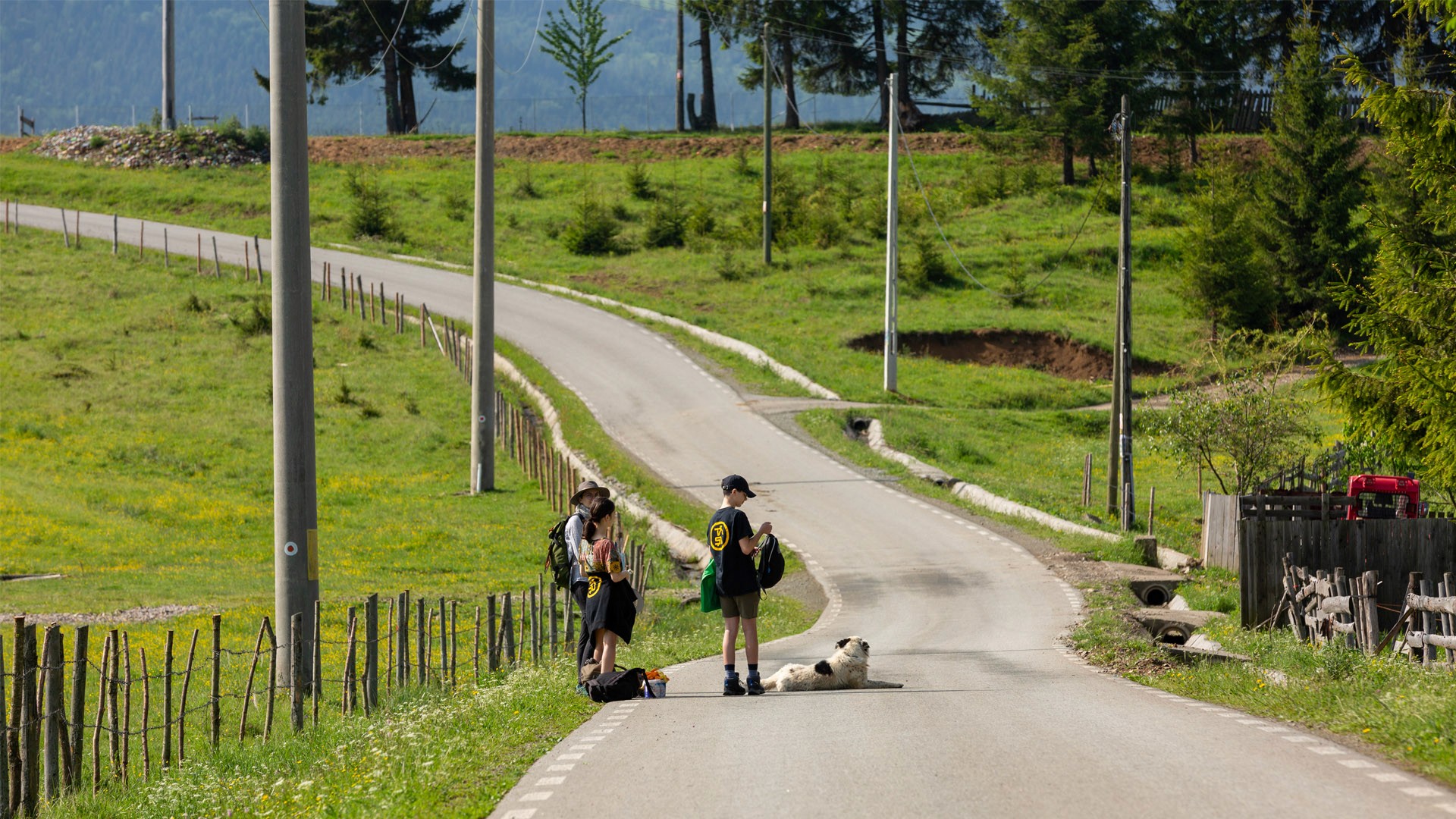
The Mountain Gendarmerie has clear responsibilities related to tourist safety and maintaining order in mountain areas. These duties logically extend to situations in which hikers face aggressive shepherd dogs or other risks specific to the mountain environment.
General responsibilities:
supervises the safety of hikers on the trail;
supports tourists in difficulty;
interacts with shepherds to prevent incidents;
cooperates with the police for interventions;
intervenes in emergency situations, including through coordination with other structures via 112.
Duties and responsibilities regarding shepherd dogs
Information and prevention actions
Gendarmes carry out information activities for shepherds and tourists regarding the risks of aggressive dogs and the legal obligations of dog owners, including the prevention of aggressive behavior.
They support dialogue with shepherds regarding the responsibility to take measures to keep dogs under control.
Incident management
If a tourist or hiker is involved in an incident, including a dog attack:
gendarmes may intervene as the first public order authority requested through 112;
they may secure the area and other participants, avoiding escalation of the incident;
they may ensure liaison with other authorities, local police and veterinary health authorities, for legal reporting and possible subsequent checks;
they provide immediate support to the persons involved until other medical or public order interventions take over.
TOWN HALLS
From a legal perspective, the responsibilities of town halls regarding public safety in relation to dogs are as follows:
Stray dogs
Legal basis: GEO 155/2001 on the management of stray dogs + local public administration legislation.
Direct legal obligations:
organizing the stray dog management service, either in-house or delegated;
capturing, transporting, and housing stray dogs in an authorized shelter;
sterilizing, identifying, and keeping records of them;
intervening upon notification;
taking over aggressive dogs from public property;
operational intervention in case of danger;
ensuring and authorizing the shelter according to veterinary sanitary rules;
recordkeeping and transparency.
Prevention measures:
sterilization campaigns;
combating abandonment;
control of the dog population.
Liability
The town hall may be liable:
civilly, for damage caused by stray dogs on public property;
administratively, for failure to organize the service;
disciplinarily/administratively.
Owned dogs
Legal basis: GEO 55/2002 on the regime of dangerous or aggressive dogs + Civil Code + public order legislation.
Indirect legal obligations, control and sanctioning:
ensuring public order through the local police;
establishing contraventions regarding dogs left loose;
applying sanctions for failure to comply with supervision obligations;
applying sanctions for lack of identification/microchipping;
applying sanctions for unsecured aggressive dogs;
notifying competent bodies in case of an offence, injury, or failure to take measures to prevent an attack.
Liability
The town hall is liable only if:
it was notified of a concrete and foreseeable danger;
it did not intervene through the legal control mechanisms.
Primary liability belongs to the owner, according to art. 1375 of the Civil Code, liability for damage caused by animals.
Shepherd dogs, outside built-up areas
There is no distinct legal regime for “shepherd dogs.” The owner is fully liable for damage.
However, the town hall has the obligation:
to know the location of sheepfolds within its territorial-administrative unit;
to cooperate with owners;
to prevent chaotic placement near the tourist trail;
to facilitate preventive dialogue, not only post-incident reaction;
to maintain public order;
to intervene through the local police if the animals may generate danger;
to cooperate with the Gendarmerie outside built-up areas.
The town hall does not have the authority to carry out arbitrary confiscation, but it does have the obligation to react to public danger.
General obligations of the town hall
According to the principles of public administration:
it must ensure safety and public order within the territorial-administrative unit;
it must prevent foreseeable risk situations;
it must act upon notification;
it must assume a clear protocol for incident management.
The town hall cannot invoke lack of competence when:
there is foreseeable public danger;
there are repeated reports;
the area is crossed by tourists.
In the context of dogs and trail safety, the role of the town hall is central in prevention and administrative intervention.
Inaction in the face of a known danger may lead to liability.
@2026. Via Transilvanica. All rights reserved.